




The answer to your questions
We have prepared a list of questions and answers, so that you are informed regarding the investigations that you will perform.
We take care of the little ones’ health by applying minimal dose radiation programs, specially designed for children.
The most varied and performant investigations with the lowest dose of radiation. -90% less radiations.
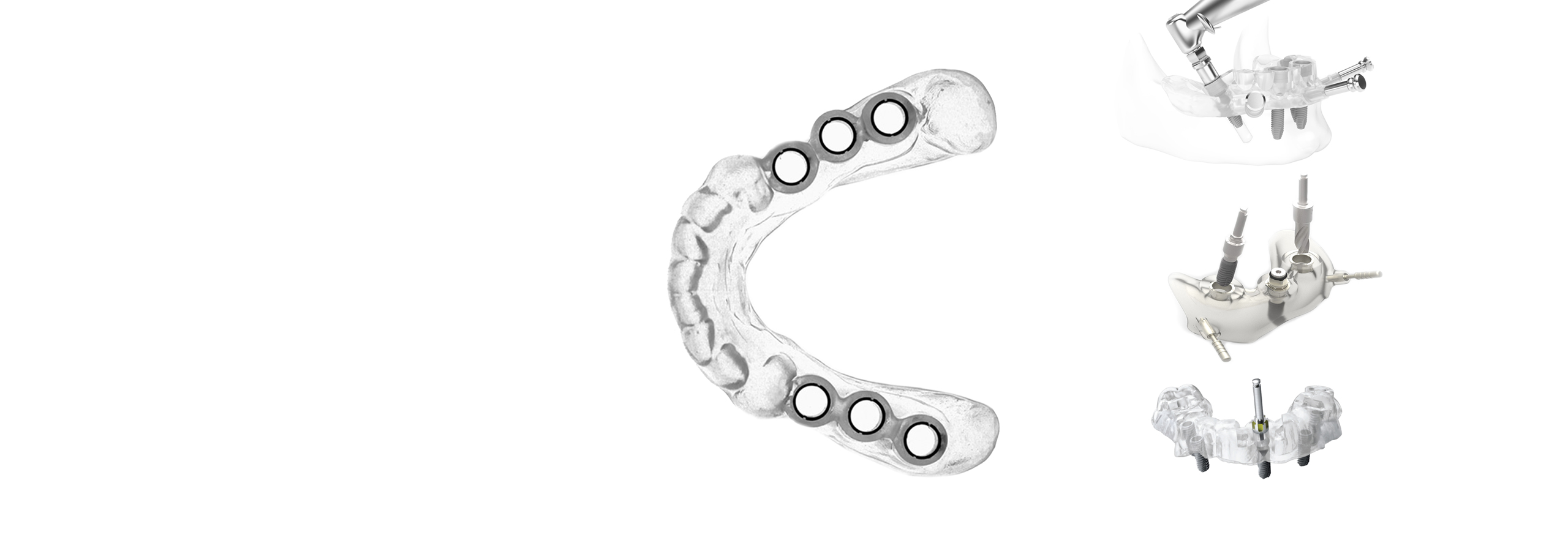
They offer maximum accuracy in implant insertion, and digital planning provides the possibility for an enhanced aesthetic of the dental crown.
They are a series of mouth guards aimed at correcting minor orthodontic issues, such as: slightly crowded, distanced, rotated and inclined towards the vestibular or the palatine plane teeth.
A successful dental treatment always starts with a performant radiograph.
We have prepared a list of questions and answers, so that you are informed regarding the investigations that you will perform.
1. Do I need an appointment?
In order to perform radiological investigations, there is no need for an appointment. If you are receiving 3D CBCT radiographs during the day that you are scheduled to visit your physician, it would be preferable that you arrive at our practice at least one hour before the appointment. 3D CBCT radiographs are complex investigations and takes about 20-45 minutes for them to be released after performing the investigation.
2. What are dental radiographs?
Intraoral (retroalveolar, bitewing, occlusal) or extraoral (panoramic, cephalometric) dental radiograph is a bidimensional image of the hard tissues obtained by using X-rays.
3. What is 3D CBCT dental tomography?
3D CBCT cone- beam computed tomography is an imaging technique that uses X-rays that are divergent, forming a cone, and captures tridimensional images of the patient’s anatomy. In comparison to 2D radiographs, computed tomography provides additional information related to the thickness or shape of the patient’s bone tissue.
4. Are radiographs painful?
Dental radiographs are entirely pain-free investigations.
5. Why are radiographs useful?
Radiographs are the first step in starting treatment, since the majority of dental conditions are invisible to the naked eye. Using radiographs, interdental cavities, root infections, bone loss, erupting teeth, cysts and dental fissures that appear following trauma can be observed, to name just a few.
6. How do I prepare in order to receive radiological investigations?
Before receiving panoramic and cephalometric radiographs or 3D CBCT computed tomography, it will be necessary to remove all jewellery from the head and neck area (bobby pins, earrings, necklaces, piercings or hair extensions that have metallic parts). You will need to also remove mobile prosthetic dentures or snap-in prosthetic dentures.
Intraoral investigations do not require any special preparation.
7. Why is it necessary to remove metallic pieces when receiving the aforementioned radiographs?
As the equipment rotates around your head, metallic items create light effects that can superimpose over the radiographic images, obstructing areas of interest.
8. What happens during the radiological investigation?
When receiving intraoral radiographs (retroalveolar, bitewing, occlusal radiographs) you will be asked to sit on a chair and bite a sterile rod, called a holder. The sensor that captures the radiological image is embedded in this rod. It is very important not to move and to breathe through your nose whilst performing the investigation.
The panoramic radiograph requires standing in front of the equipment. You will be asked to bite on a plastic piece and to rest your chin on the chinrest attached to the equipment. During the panoramic radiograph it is required for the tongue to be attached to the palate. It is also required not to swallow and to breathe through the nose. It is important to stand as straight as possible and not to move during the scan. You will know when the equipment will start recording the radiograph, because it will make a sound signal. Immediately after, the equipment’s arm will start rotating around your head.
9. Do I get the results immediately?
All radiographs performed in the DentaVis Centers are issued immediately. The waiting time varies according to the performed radiograph. 2D intraoral and extraoral (panoramic, cephalometric) radiographs are released 5 minutes after the investigation is completed. 3D CBCT tomography is a more complex investigation and therefore the results are released 20 to 45 minutes after the completion of the scan.
We kindly ask you to take this into account in case that you have an appointment with your physician on the same day that you will perform the radiological investigation.
10. Are dental radiographs dangerous?
Of all radiological investigations that are performed in the medical field, digital dental radiographs use by far the lowest level of radiation. In the DentaVis Digital Dental Radiology Centres we are constantly investing in improvement and our patient’s health is uppermost in our mind. We use the latest generation of Soredex digital equipment that emits the lowest amount of radiation on the market. Also, in the DentaVis Centres, the protecting lead apron is always used.
You can find further details on this matter in the DentaVis Radiation Information Leaflet.
11. Can radiological investigations be performed during pregnancy and lactation?
Digital dental radiography and 3D CBCT tomography use a very low level of radiation. It is important to understand that dental radiography does not impact the embryo, the organogenesis process or birth. The radiations emitted by digital dental X-ray equipment are extremely low, aimed towards the teeth, and their reflection towards the areas considered at risk (abdomen, ovaries, and breasts) is avoided by using a special apron that contains lead. However, as an additional precaution it is recommended to avoid performing radiographs during the first and last trimester of pregnancy.
12. Is it necessary for children to receive radiographs?
It is important that, following the dentist’s guidance, periodical examinations of the children are performed starting at an early age, as their dentition is constantly evolving.
Radiological equipment used in the DentaVis Centres is equipped with imaging software that is especially designed for paediatric patients, with minimal radiation doses.


We hold, transfer and process personal data in complete accordance with legal requirements, we ensure and respect the right to privacy regarding your personal data and we impose adequate measures regarding the disclosure, loss and leak in information that are related to you.
We may request cookies to be set on your device. We use cookies to let us know when you visit our websites, how you interact with us, to enrich your user experience, and to customize your relationship with our website.
Click on the different category headings to find out more. You can also change some of your preferences. Note that blocking some types of cookies may impact your experience on our websites and the services we are able to offer.
These cookies are strictly necessary to provide you with services available through our website and to use some of its features.
Because these cookies are strictly necessary to deliver the website, you cannot refuse them without impacting how our site functions. You can block or delete them by changing your browser settings and force blocking all cookies on this website.
These cookies collect information that is used either in aggregate form to help us understand how our website is being used or how effective our marketing campaigns are, or to help us customize our website and application for you in order to enhance your experience.
If you do not want that we track your visist to our site you can disable tracking in your browser here:
We also use different external services like Google Webfonts, Google Maps and external Video providers. Since these providers may collect personal data like your IP address we allow you to block them here. Please be aware that this might heavily reduce the functionality and appearance of our site. Changes will take effect once you reload the page.
Google Webfont Settings:
Google Map Settings:
Vimeo and Youtube video embeds:
You can read about our cookies and privacy settings in detail on our Privacy Policy Page.
Privacy Policy